
 Call 866-844-6512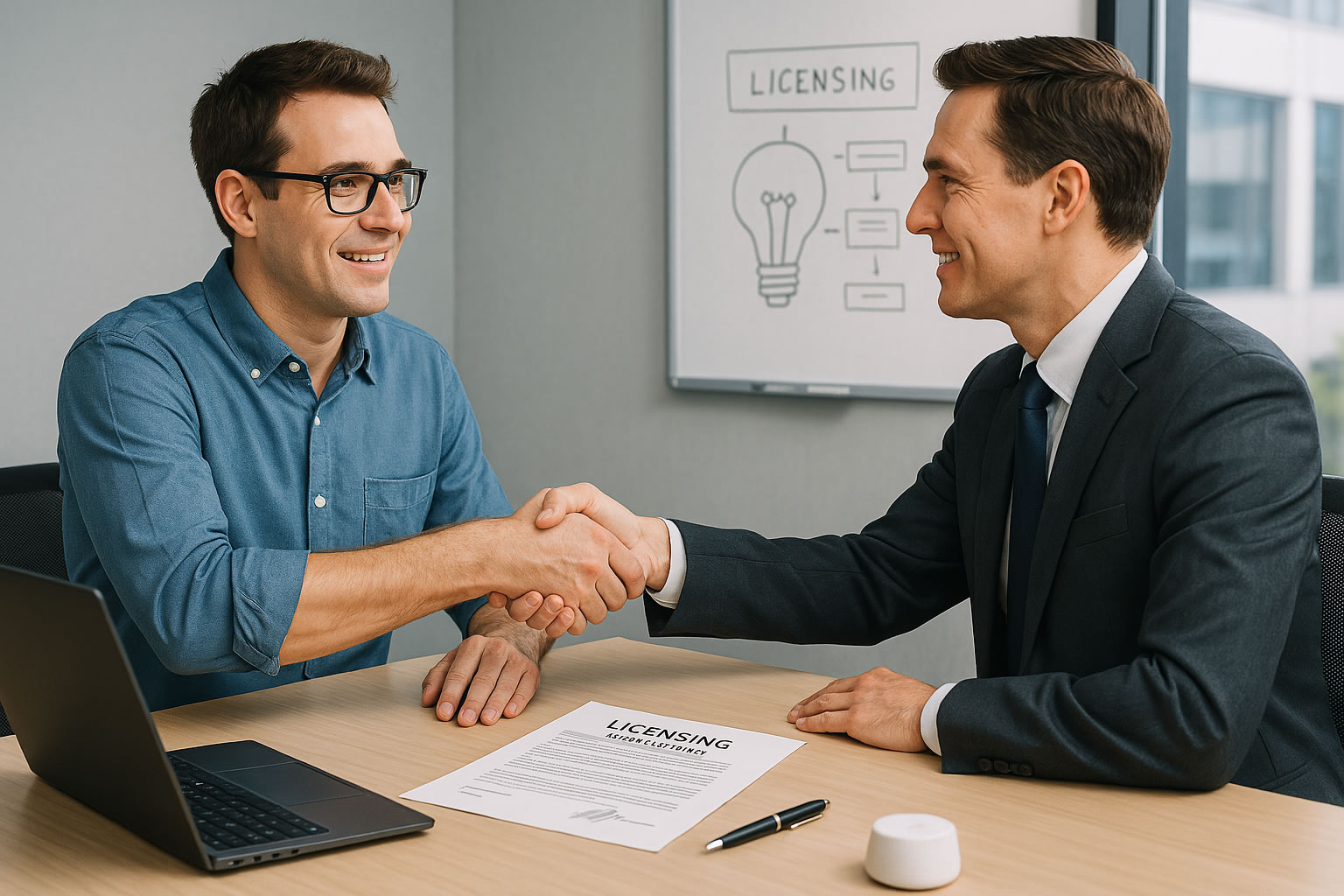
Introduction
If you’ve created an invention but don’t want to manufacture and sell it yourself, licensing your invention can be a smart way to generate passive income. Licensing an invention allows you to sell the rights to your invention to a company that handles production, marketing, and distribution. Ready to learn how to license an invention?
This guide explains how to license an invention, covering the licensing process, key considerations, and expert negotiation strategies.
Step 1: Determine If Licensing Is Right for You
What Is Licensing?
Licensing is a business agreement where an inventor grants another party (the licensee) the rights to manufacture and sell their invention in exchange for royalties or payments.
Benefits of Licensing Your Invention
- Lower Risk: Avoid the costs of manufacturing, marketing, and distribution.
- Passive Income: Earn royalties without running a business.
- Faster Market Entry: Partner with established companies to scale production quickly.
- Leverage Industry Expertise: Licensees handle marketing and sales, reducing your workload.
Potential Downsides
- Less Control: The company decides how to market and price the product.
- Lower Profits Compared to Self-Manufacturing.
- Finding a Licensee Can Take Time.
Step 2: Protect Your Invention Before Licensing
Before presenting your invention to potential licensees, you must protect your intellectual property (IP).
1. File a Patent or Provisional Patent Application
A patent grants exclusive rights to your invention. Filing a provisional patent application gives you 12 months to secure a priority filing date before filing a full utility patent.
2. Use Non-Disclosure Agreements (NDAs)
When pitching your invention, ask potential licensees to sign an NDA to prevent them from using your idea without permission.
3. Trademark and Copyright Considerations
If your invention includes branding elements, consider registering a trademark for names and logos.
Step 3: Research Potential Licensees
Find companies that would benefit from your invention. Target businesses that already sell similar or complementary products.
Where to Find Licensees
- Industry trade shows and expos
- Online business directories (ThomasNet, Kompass, Alibaba)
- Patent databases (Identify companies with similar patents)
- Networking and LinkedIn outreach
Step 4: Develop a Winning Pitch
Once you’ve identified potential licensees, create a compelling presentation.
Key Elements of a Strong Licensing Pitch
- Problem & Solution: Explain how your invention solves a market problem.
- Market Potential: Show demand and estimated sales potential.
- Competitive Advantage: Highlight what makes your invention unique and patentable.
- Prototype or Demonstration: A working model increases credibility.
- Clear Licensing Proposal: Outline the licensing deal structure.
Step 5: Negotiate the Licensing Agreement
Key Terms to Negotiate
- Royalty Rate: Typically 3%–10% of net sales.
- Upfront Payment: Some companies offer an initial payment before royalties.
- Exclusivity vs. Non-Exclusivity: Decide if one company gets exclusive rights or if you can license to multiple companies.
- Term Length: Define how long the agreement lasts (5-10 years is common).
- Minimum Sales Requirements: Ensure the company commits to selling a certain number of units.
How to Negotiate Effectively
- Research standard industry royalty rates.
- Get multiple offers to compare deals.
- Work with a patent attorney or licensing expert for legal guidance.
Step 6: Finalize and Monitor the Agreement
Once you and the licensee agree on terms:
- Have a lawyer draft or review the contract.
- Ensure royalties are paid on time.
- Monitor the licensee’s sales performance.
Conclusion
Licensing an invention is a low-risk, high-reward strategy for inventors looking to monetize their ideas. By securing patent protection, researching potential licensees, crafting a strong pitch, and negotiating effectively, you can maximize the value of your invention.
Need help licensing your invention? InventionHome connects inventors with licensing opportunities and patent professionals to simplify the process.
Get started today with a free consultation!
How InventionHome Can Help
Bringing an invention to market can be challenging, but InventionHome simplifies the process with expert marketing and licensing services designed to connect your product with companies actively seeking new innovations. We also work with independent patent attorneys who assist with professional patent searches, filings, and legal documentation to help protect your idea.
Ready to launch and protect your invention? Get a free consultation with InventionHome today!
Frequently Asked Questions (FAQs)
How much money can I make from licensing an invention?
Royalty rates typically range from 3% to 10% of net sales, but earnings vary based on market size and licensing terms.
Do I need a patent to license my invention?
While a patent is not required, it provides stronger protection and makes your invention more attractive to licensees.
How long does it take to license an invention?
It can take several months to years to find the right licensee and negotiate a deal.
For more details, visit USPTO.gov.
About InventionHome
InventionHome is a trusted leader in helping everyday inventors bring their ideas to life. From patent protection and 3D virtual prototyping to product marketing and licensing, we provide the tools, expertise, and guidance to support inventors at every step. Our streamlined, affordable approach helps simplify the invention process while increasing the chances of success.
Whether you’re just starting with an idea or looking to license a finished product, InventionHome is here to help. We work with first-time inventors, seasoned innovators, and everyone in between—connecting them with companies looking for new products and opportunities. Our mission is to make inventing accessible, rewarding, and achievable.
Ready to take the next step? Email us at info@inventionhome.com or request your free consultation here to get expert help with your invention journey.
Disclaimer: This article is intended for informational purposes only and should not be construed as legal advice. While we strive to provide accurate and helpful information about the invention and patent process, InventionHome is not a law firm and does not offer legal services or legal representation. Nothing in this article should be considered a substitute for legal advice from a licensed attorney who is qualified to practice in your jurisdiction and is familiar with the specific facts of your situation. If you have questions about patent law, intellectual property rights, or the legal protection of your invention, we strongly recommend consulting with a qualified patent attorney.

